2026 Best How to Make Artificial Trees Look More Realistic

Time:2026-10-14 Author:Madeline
0%

Artificial trees are no longer limited to dusty office corners or predictable hotel lobbies. In 2026, they are becoming practical tools for warmer, more nature-connected interiors. The real challenge is not buying an expensive tree. It is making the entire scene feel believable.

Human Spaces’ Global Impact of Biophilic Design report surveyed 7,600 workers across 16 countries. It found that biophilic workplaces were associated with 15% higher reported wellbeing, 6% higher productivity, and 15% more creativity. These findings concern natural design broadly, not artificial trees alone. Still, they explain why realistic greenery matters. Gensler Research Institute’s workplace studies also continue to connect environmental quality with user experience. Appearance plays a measurable role in perception.

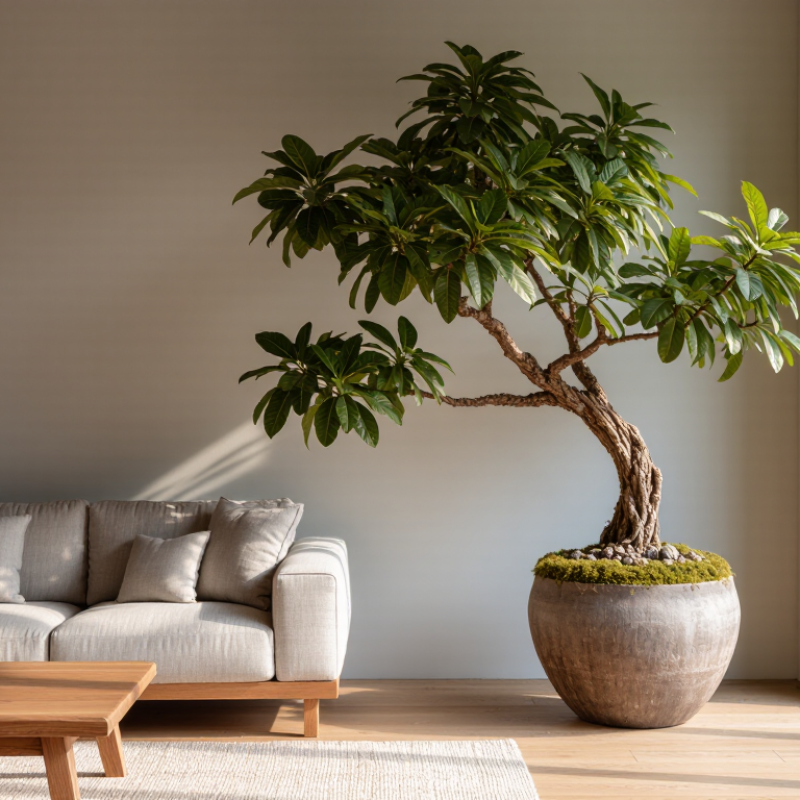
This guide explains How to make artificial trees look more realistic through proportion, placement, texture, lighting, and maintenance. Start with the roots. A visible plastic pot can weaken an otherwise convincing display. Use a heavy planter, natural stones, preserved moss, or a textured basket. Dust matters more than many owners expect. Wipe broad leaves gently, then reshape bent branches by hand.

Do not make every branch perfectly symmetrical. Nature is inconsistent. Some leaves should sit higher, while others should overlap or turn toward the light. A tree placed beside a window may still need careful positioning. Artificial foliage does not respond to sunlight, but viewers expect it to. That small contradiction deserves attention.

The advice is practical, not magical. A low-cost tree can look convincing with thoughtful styling. A premium tree can still appear artificial when placed carelessly. Examine it from the doorway, the sofa, and eye level. Realism depends on the whole scene.
2026 Best How to Make Artificial Trees Look More Realistic

Choose an Artificial Tree That Matches Its Natural Counterpart

Choosing an artificial tree that resembles its natural counterpart matters more than adding decorations. Study the living species first. A fiddle-leaf fig has broad, slightly uneven leaves and an upright growth pattern. An olive tree usually shows narrow leaves, fine branches, and a visibly twisted trunk. Matching these traits prevents a plastic-looking result.

I compare trees at eye level, not only in online photographs. Natural trunks taper toward the branches, while poor replicas often look like thick brown tubes. Look for layered branching, varied leaf angles, and several shades of green. Perfectly identical leaves signal manufacturing. Too much shine also looks false under a window. A matte finish usually appears more convincing.

Measure the room before buying. A tall tree with a narrow crown suits a corner, while a spreading species needs breathing space. Place the pot beside furniture to check scale. I also bend a few branches gently and rotate the tree under daylight. Some artificial trees look realistic from one side only. That flaw matters in open rooms. Dust collects quickly on textured leaves, so choose a design that can be cleaned with a soft, dry cloth. A matching pot helps, but the tree’s structure must carry the illusion.

Shape the Branches and Vary the Foliage for a Natural Form

2026 Best How to Make Artificial Trees Look More Realistic

Shape the branches before placing the tree. Bend each stem gradually, not at one sharp angle. Let some branches rise, while others dip toward the floor. Keep it uneven. Real trees rarely form perfect circles.

Start with the main trunk, then work outward. Turn a few leaves toward the light and hide others behind denser clusters. Vary the foliage by depth, size, and direction. Darker leaves should sit inside the canopy. Smaller leaves can frame the outer edges. Leave small gaps. Perfect fullness looks manufactured.

In installation work, I often make the tree too symmetrical at first. That is a useful mistake. Step back three meters, then adjust only the most obvious patterns. The Human Spaces Global Report, surveying 7,600 workers across 16 countries, linked natural elements with 15% higher reported well-being and 6% greater productivity. Artificial foliage cannot provide living-air benefits, but realistic variation can support visual comfort. World Green Building Council research also identifies people-related costs as roughly 90% of building operating expenses, reinforcing the value of thoughtful interior environments. Use matte leaves where possible, and remove visible plastic seams. A little imperfection helps. Too much styling does not.

Add Realistic Trunk, Root, and Leaf Details

2026 Best How to Make Artificial Trees Look More Realistic

Realism begins with the trunk, not the leaves. Choose a trunk with uneven color, shallow grooves, and a slight natural bend. A perfectly straight surface often exposes the tree as artificial. Add thin secondary branches with varied thicknesses. Keep a few small scars or knots visible.

Roots deserve attention. Cover the pot surface with irregular bark chips, dry moss, and small stones. Leave some soil-like texture exposed. Avoid arranging every piece evenly. Nature is less organized. According to FAO’s Global Forest Resources Assessment 2020, forests cover about 31% of the world’s land area, so viewers recognize complex, layered forest details instinctively.

Leaves should vary in size, angle, and density. Remove several leaves near the inner branches, where real plants often receive less light. Bend selected stems gently toward a window. Wipe away excessive shine; matte surfaces appear more believable under indoor lighting. The Global Wellness Institute’s 2024 report valued the wellness real estate market at 438 billion dollars in 2023, reflecting growing interest in environments that feel connected to nature. Still, an artificial tree cannot replace living greenery. That distinction matters. I sometimes overfill the canopy, then regret it. A little empty space usually looks more convincing.

2026 Best How to Make Artificial Trees Look More Realistic - Add Realistic Trunk, Root, and Leaf Details

Realism Detail Recommended Specification Practical Application Natural Visual Effect Care Requirement
Trunk Diameter Use a trunk diameter equal to approximately 4–7% of the tree height. For a 180 cm tree, choose or build a trunk about 7–13 cm wide. Creates a stronger visual foundation and prevents a top-heavy appearance. Check the trunk covering for cracks, peeling, or exposed metal.
Bark Texture Combine 2–4 brown and gray tones with irregular vertical grooves. Apply textured paint, flexible bark wrap, or molded surface material. Breaks up smooth surfaces that commonly reveal an artificial construction. Dust grooves gently with a soft brush every 1–3 months.
Trunk Taper Reduce the trunk width gradually from the base toward the upper branches. Use tapered foam, sculpting material, or layered bark pieces. Matches the growth pattern of most mature trees more closely than a uniform pole. Inspect branch joints after moving or repositioning the tree.
Visible Root Flare Create 3–6 roots extending outward 15–30 cm from the trunk base. Shape lightweight foam, air-dry clay, or molded resin over the planter surface. Makes the trunk appear anchored instead of simply inserted into a container. Secure lightweight roots so they do not shift during cleaning.
Root Thickness Make roots thickest beside the trunk and gradually thinner toward the tips. Blend wide root bases into smaller raised lines or exposed root strands. Adds natural variation and avoids evenly shaped decorative roots. Repair loose edges with a compatible adhesive or filler.
Leaf Size Variation Mix at least 2–3 leaf sizes, with smaller leaves near branch tips. Place larger leaves toward the inner canopy and smaller leaves on outer growth. Mimics the uneven development found in natural foliage. Replace bent, faded, or missing leaves as needed.
Leaf Color Range Use 3–5 related shades, including dark green, medium green, and lighter new-growth tones. Distribute darker foliage inside the canopy and lighter foliage near the outer edges. Adds depth and reduces the uniform color associated with plastic foliage. Keep the tree away from prolonged direct sunlight to reduce fading.
Leaf Sheen Choose matte or low-sheen leaves rather than highly reflective surfaces. Reduce gloss with a compatible matte coating only after testing a hidden area. Prevents harsh reflections that can make synthetic leaves look plastic. Use a dry or slightly damp microfiber cloth; avoid soaking electrical components.
Branch Direction Alternate branch angles between approximately 30° and 60° from the main stem. Bend flexible branches gradually and leave small gaps between major clusters. Creates a less symmetrical silhouette with more believable light penetration. Reposition branches after transport or seasonal storage.
Canopy Density Leave approximately 10–20 cm of visual spacing between selected foliage clusters. Open crowded areas and add individual leaves to visibly empty sections. Balances fullness with natural gaps instead of producing a solid green mass. Dust both the front and underside of leaves during cleaning.
Stem Visibility Allow short sections of brown or green stems to remain visible between clusters. Avoid covering every branch joint with foliage; conceal only obvious wire or plastic connectors. Provides the branching structure expected in a real plant. Check exposed joints for discoloration or looseness.
Soil or Moss Cover Cover the planter surface with a 2–5 cm layer of preserved moss, bark chips, or decorative soil. Hide the support block, pot insert, and visible gaps around the root base. Connects the trunk and roots visually to the container. Keep the covering dry and replace it if it becomes compressed or dusty.
Lighting and Placement Position near soft, indirect light and leave at least 15–30 cm from crowded walls or furniture. Use side lighting to reveal trunk texture, root contours, and layered foliage. Natural shadows add depth and make the tree appear less flat. Rotate the tree periodically for even exposure and consistent presentation.

Note: The measurements above are practical design guidelines for improving visual realism; suitable proportions may vary by tree species, height, container size, and indoor placement.

Place the Tree in a Suitable Pot with Natural-Looking Soil

2026 Best How to Make Artificial Trees Look More Realistic

Place the Tree in a Suitable Pot with Natural-Looking Soil

A convincing artificial tree begins below the leaves. The pot should match the tree’s scale, weight, and visual character. A tall tree usually needs a wide, stable container, not a narrow decorative vase. The 2024 National Gardening Association survey reported that about 80% of U.S. households participated in gardening activities. That familiarity makes viewers sensitive to unnatural containers and exposed plastic stems. Choose matte ceramic, aged terracotta, woven fiber, or textured stone finishes. Avoid perfectly clean surfaces. Real pots often show slight color variation, tiny scratches, or softened edges.

Cover the base with a thin layer of natural-looking soil, fine bark, or dark mineral grit. Use uneven depth around the trunk. Real soil rarely forms a perfect circle. A practical mix can combine dark coco fiber, small bark pieces, and a few pale stones. Keep the material dry and lightweight. The Royal Horticultural Society advises using drainage-conscious container practices for living plants, but artificial trees do not need wet soil. Moisture can create odors, stains, or hidden mold inside decorative pots. That detail is easy to overlook.

Leave a small gap between the soil surface and the rim. Add one exposed root-like curve, but do not overdo it. Too much decoration looks staged. I sometimes make the soil layer too smooth; it photographs well, yet feels artificial in person. A final touch of dust near the pot’s lower edge can improve realism, though excessive dust simply looks neglected.

2026 Best: How to Make Artificial Trees Look More Realistic

Place the tree in a suitable pot with natural-looking soil

The chart uses a practical 1–10 visual realism score to compare common pot-and-soil styling choices. A proportionate pot, exposed natural-looking soil, and realistic soil texture generally contribute most to a convincing artificial tree display.

Use Proper Lighting and Routine Maintenance to Enhance Realism

2026 Best How to Make Artificial Trees Look More Realistic

Proper lighting can change an artificial tree from decorative to surprisingly lifelike. In my experience, warm bulbs between 2700K and 3000K create gentle shadows on leaves. Place the light slightly to one side, rather than directly above the tree. This reveals different leaf angles and reduces the flat, plastic appearance. A nearby wall can reflect soft light behind the branches. Avoid strong, cool lighting, which often makes artificial foliage look harsh.

Routine maintenance matters just as much. Dust leaves weekly with a dry microfiber cloth or a soft brush. Support each stem while cleaning, especially near the base. Once a month, rotate the tree and reshape crowded branches by hand. Natural trees rarely look perfectly symmetrical. Leave small gaps between leaves. Check the trunk, pot, and visible support materials during each adjustment. Loose stems can make the entire arrangement appear artificial.

A little imperfection helps. I sometimes spread branches too evenly, then notice the tree looks staged. Reworking only a few sections usually feels more natural. Keep the tree away from direct sunlight, radiators, and damp areas to reduce fading or material damage. Subtle shadows, clean foliage, and irregular spacing work together better than expensive decorations. Realism comes from consistent care.

FAQS

How should I shape the branches for a more natural appearance?

Bend each stem gradually, rather than creating one sharp angle. Let some branches rise and others dip slightly. Keep the outline uneven. Perfect circles look manufactured.

How can I arrange the leaves more realistically?

Turn a few leaves toward the window and hide others inside denser clusters. Use different depths, sizes, and directions. Keep darker leaves near the canopy’s center. Leave small gaps.

Should every branch be evenly spaced?

No. Natural trees have irregular spacing and varied growth. Step back about three meters and correct only obvious patterns. I often make the tree too symmetrical at first.

What trunk details improve an artificial tree?

Choose a trunk with uneven color, shallow grooves, and a slight bend. Add thin secondary branches with varied thicknesses. Small knots and scars can make the surface feel more natural.

How can I make the base look like real soil?

Cover the pot with dark fiber, small bark pieces, and a few pale stones. Vary the material depth around the trunk. Leave a little soil-like texture visible. Uneven looks better.

What type of pot suits a tall artificial tree?

Use a wide, stable pot that matches the tree’s height and weight. Matte ceramic, aged terracotta, textured stone, or woven fiber can work well. Avoid narrow vases and perfectly clean surfaces.

Is it useful to add exposed roots?

Add one gentle root-like curve near the trunk. Keep it subtle. Too many roots look staged. I sometimes overdecorate the base, then remove half of it.

How should I handle shiny leaves and artificial seams?

Wipe away excessive shine with a soft, dry cloth. Hide visible plastic seams among inner branches. Matte surfaces usually look more believable under indoor lighting.

Does realistic artificial foliage provide the same benefits as living greenery?

No. It can improve visual comfort, but it does not provide living-air benefits. That distinction matters. Realistic variation helps, but it is not a complete replacement for nature.

Conclusion

How to make artificial trees look more realistic begins with choosing a tree that closely matches a natural species in its leaf shape, color, branch pattern, and overall proportions. Once selected, gently spread and reshape the branches so the foliage has an uneven, organic form rather than a uniform appearance. Vary the direction and density of the leaves to create the depth and irregularity found in real trees.

Small details can make a significant difference. Add natural-looking trunk texture, visible roots, and a few subtle variations in leaf color or size. Place the tree in a suitable pot filled with realistic soil, moss, stones, or other simple natural accents. Position it where soft, balanced lighting can highlight its structure without creating distracting shadows. Finally, dust the leaves regularly, adjust the branches occasionally, and replace or repair damaged details. With thoughtful styling and routine maintenance, an artificial tree can become a convincing and attractive part of any interior.

Madeline

Madeline

Madeline is a dedicated marketing professional with a wealth of expertise in our company's core offerings. With a keen understanding of the industry, she brings a unique perspective to her role, consistently delivering high-quality content that highlights the superior aspects of our products. As......